In nightlife, events, and entertainment spaces, lighting often steals the spotlight. Yet behind every unforgettable experience lies a more powerful force: music selection. While lighting enhances ambiance, music defines emotion, energy, and connection.
Understanding why music selection matters more than lighting reveals how sound—not visuals—ultimately controls how people feel, move, and remember an experience.
Music Sets the Emotional Foundation
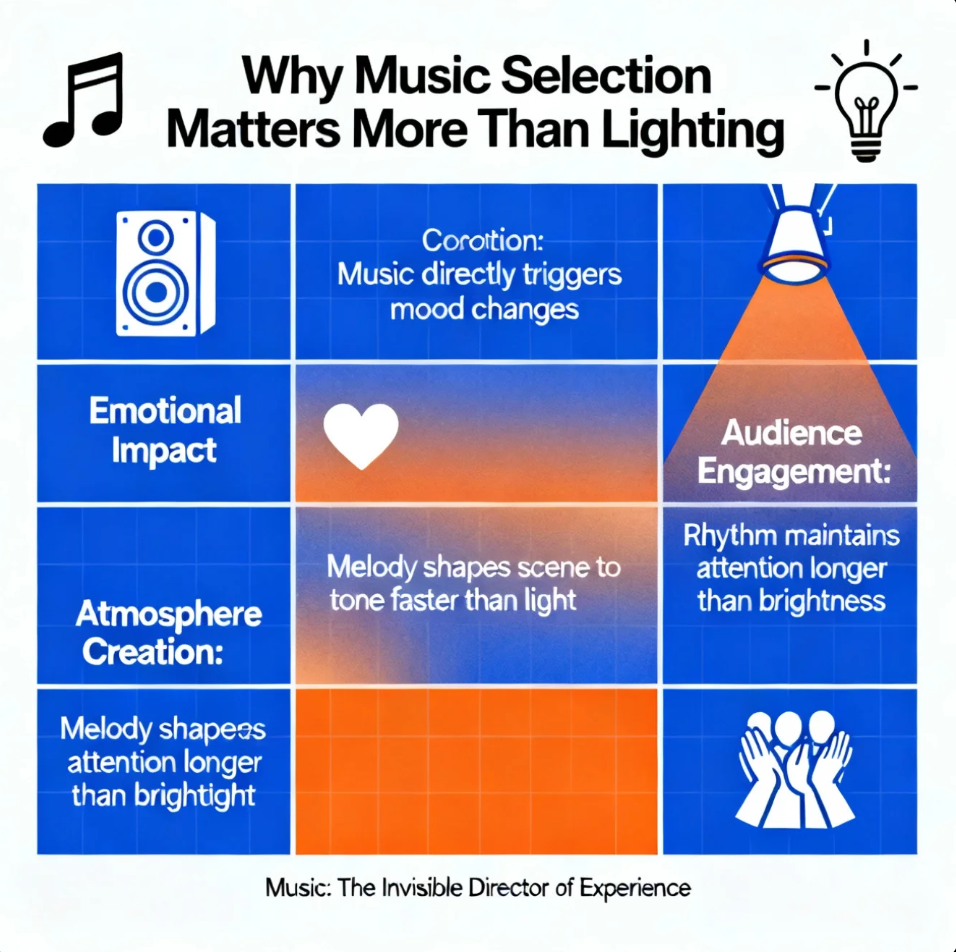
Sound Shapes Feeling Instantly
Music has a direct psychological impact. Within seconds, the right track can:
- Shift mood and energy
- Evoke memories and emotion
- Create anticipation or calm
Lighting supports atmosphere, but music creates it. Even in minimal visual settings, well-chosen music can fully engage an audience.
Music Drives Crowd Behavior
Energy, Flow, and Movement
In clubs, events, or restaurants, music selection determines:
- When people arrive or leave
- How long they stay
- Whether they dance, relax, or socialize
Lighting may enhance excitement, but it cannot make people move. Music controls pace and participation, making it the primary driver of engagement.
Poor Music Can Ruin Great Lighting
The Mismatch Effect
A visually stunning space can still feel uncomfortable if the music is wrong:
- Tempo clashes with the environment
- Genre doesn’t match audience expectations
- Volume disrupts conversation or immersion
In contrast, strong music selection can compensate for simple or subtle lighting, keeping the experience cohesive and enjoyable.
Music Creates Identity and Memory
Sound Is More Memorable Than Sight
People may forget lighting details, but they remember:
- Songs that defined a night
- DJs or playlists that matched their mood
- Musical moments tied to emotions
Music builds brand and venue identity, shaping how audiences recall and talk about an experience long after it ends.
🔗 Outbound link: Psychology Today – Music and Emotion
https://www.psychologytoday.com
Adaptability in Real Time
Music Responds, Lighting Reacts
Music selection can be adjusted instantly based on:
- Crowd size and energy
- Time of night
- Audience demographics
Lighting setups are often fixed or slow to change. DJs, curators, and hosts can read the room through music, making it a more flexible and responsive tool.
Lighting Enhances, Music Leads
Understanding the Supporting Role
Lighting works best when it follows music:
- Beat-matched visuals
- Color changes aligned with tempo
- Accents timed to drops or transitions
Without strong music selection, lighting lacks direction. Music gives lighting purpose and context.
Why Professionals Prioritize Music First
Experienced DJs, event planners, and venue designers know:
- Music sets tone before visuals are noticed
- Sound reaches everyone, even when not looking
- Emotional response starts with what we hear
That’s why sound design and music curation often receive greater strategic focus than lighting in successful venues.
Conclusion
Understanding why music selection matters more than lighting reshapes how we think about atmosphere and experience. Lighting can impress, but music connects. It drives emotion, controls energy, and creates lasting memories.
In any setting—from nightlife to dining to events—music is not an accessory. It is the foundation of experience.
About the Author