DJ culture has always been driven by innovation. What began with vinyl records and manual beatmatching has transformed into a global movement powered by software, controllers, and digital platforms. The evolution of DJ culture reflects not only changes in technology, but also shifts in creativity, accessibility, and musical identity.
From underground clubs to festival main stages, the DJ’s role has continually evolved—without losing its core spirit.
🎵 1. The Vinyl Era: Foundations of DJ Craft
The roots of DJ culture lie in vinyl.
In the 1970s and 1980s, DJs relied on:
- Turntables and physical records
- Manual beatmatching by ear
- Crate-digging to find rare tracks
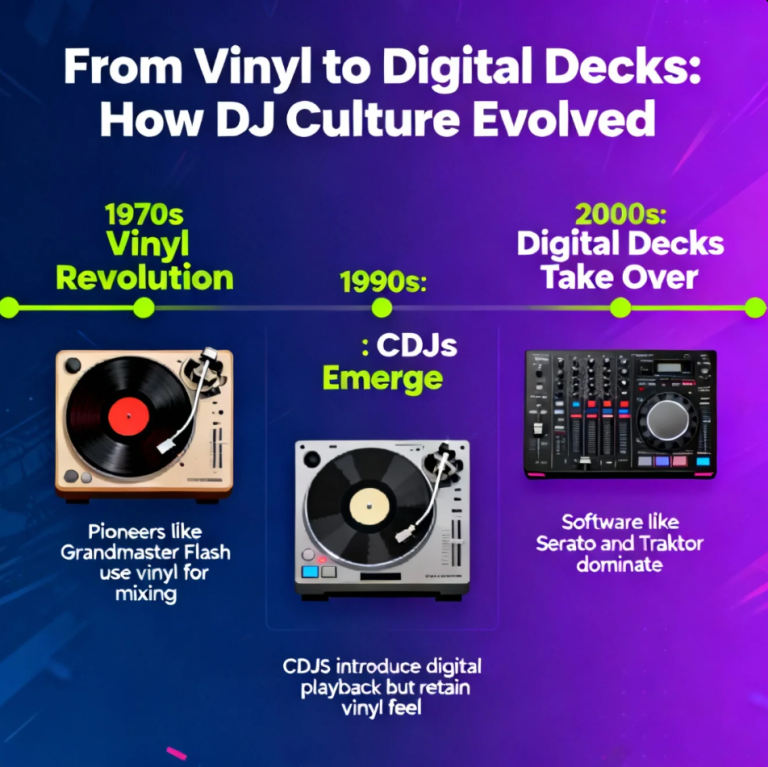
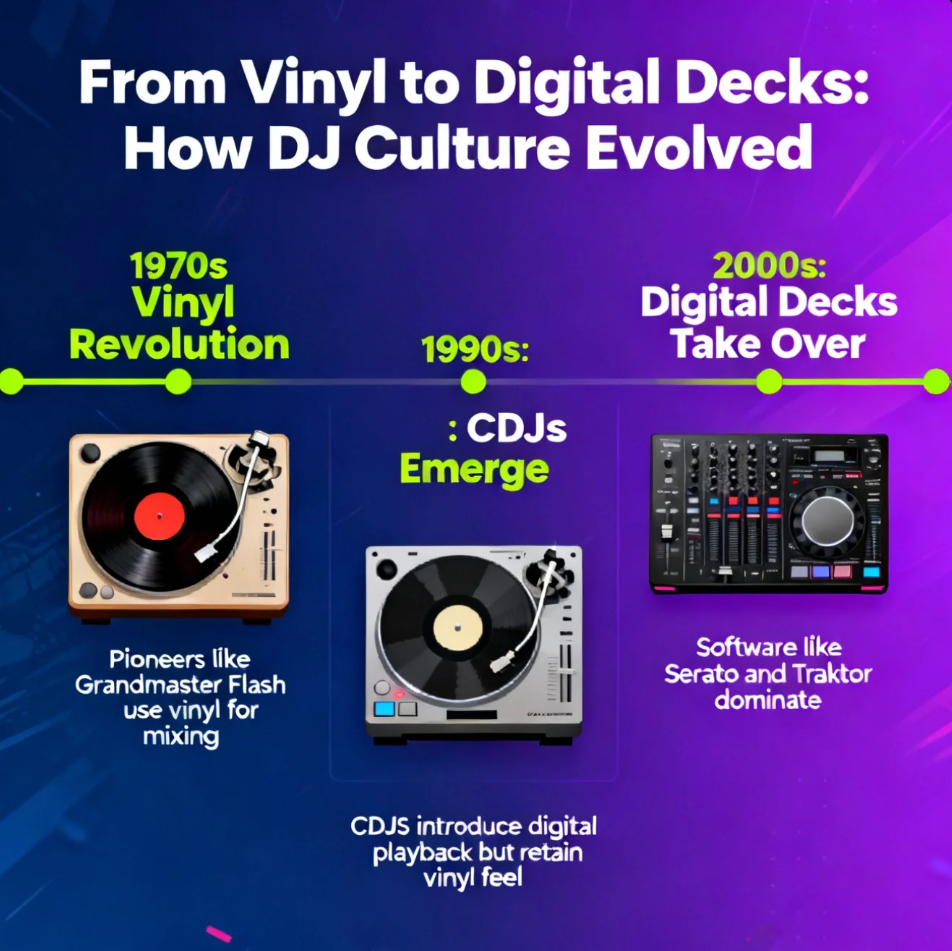
This era shaped the DJ as a craftsperson. Skill was measured by precision, musical knowledge, and the ability to read a crowd. Genres like hip-hop, disco, and house were built on vinyl-based DJ innovation.
Vinyl demanded patience, practice, and deep musical connection.
🕺 2. Club Culture and the Rise of the DJ as Artist
As club culture expanded in the late 80s and 90s, DJs became cultural tastemakers.
Key developments included:
- Extended club sets and residencies
- The emergence of superstar DJs
- Genre-defining scenes like techno in Detroit and house in Chicago
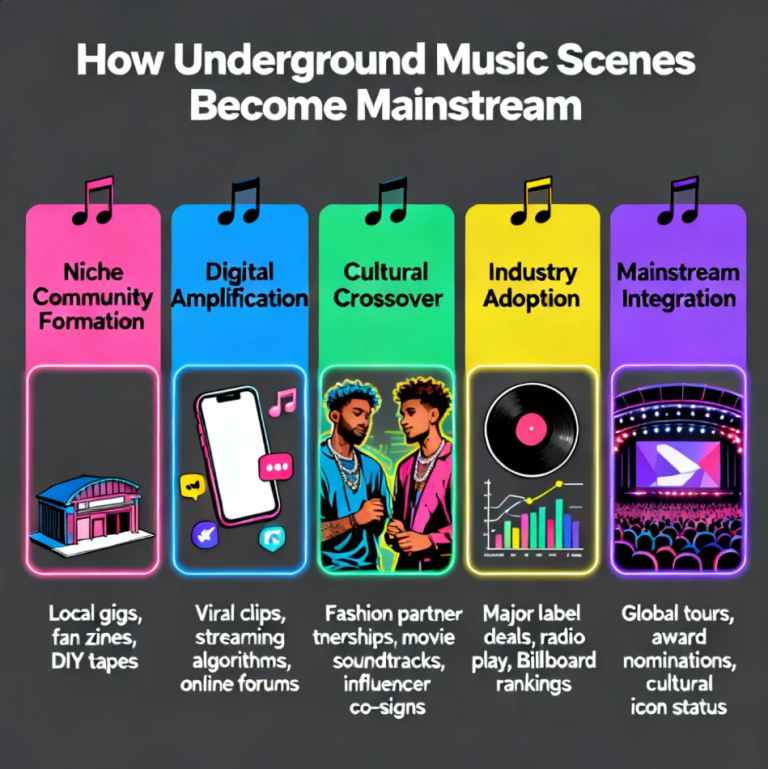
During this phase of the evolution of DJ culture, DJs were no longer just selectors—they were artists shaping nightlife, fashion, and youth culture.
💿 3. CDs and the First Digital Shift
The introduction of CDJs in the late 1990s marked a turning point.
CD technology offered:
- Greater portability than vinyl
- Looping and cue-point functions
- Increased reliability in live performance
While controversial at first, CDs expanded creative possibilities. DJs could experiment more freely without sacrificing performance control, bridging the gap between analog tradition and digital future.
💻 4. Software, Controllers, and Digital Decks
The 2000s ushered in the most dramatic transformation yet.
Digital DJ software and controllers enabled:
- Laptop-based mixing
- Digital libraries replacing physical media
- Advanced effects, syncing, and sampling
This phase democratized DJing. Entry barriers dropped, allowing more people to participate in DJ culture. While debates around “sync buttons” emerged, creativity—not tools—became the defining factor.
🌐 5. Streaming, Social Media, and Global Reach
Today’s DJs operate in a connected world.
Modern DJ culture includes:
- Streaming sets to global audiences
- Discovering music through online platforms
- Building personal brands via social media
The DJ is now performer, curator, content creator, and entrepreneur. Technology has expanded reach, allowing DJs to influence culture beyond the dance floor.
🎧 6. Tradition Meets Innovation
Despite technological shifts, core DJ values remain unchanged:
- Track selection still defines taste
- Crowd connection still defines success
- Musical storytelling still defines artistry
Vinyl has even experienced a revival, proving that the evolution of DJ culture is not linear—it’s cyclical. Old and new coexist, enriching the scene.
🔮 Final Thoughts: A Culture That Never Stops Mixing
From vinyl grooves to digital waveforms, DJ culture has continuously adapted while preserving its essence. Technology changed the tools, but not the purpose: to move people through music.
The future of DJing will likely blend AI, immersive experiences, and new formats—but its heart will always beat on the dance floor.
About the Author